Does Water Have a Memory?
Water seems simple.
We pour it into a glass. We watch it fall as rain. We see it freeze into ice or disappear as steam. In school we learn the tidy formula: H₂O. Two hydrogen atoms, one oxygen atom.
Case closed.
But the deeper scientists have looked at water, the more complicated it has become. Under the microscope and under careful measurement, water does not behave like a passive liquid. It behaves like a dynamic system of constantly shifting relationships.
And that has led to a fascinating question:
Can water remember what has happened to it?
A Liquid That Is Always Rearranging Itself
Water molecules are not isolated. Each molecule carries a slight electrical imbalance that causes it to attract neighboring molecules. These attractions form what chemists call hydrogen bonds.
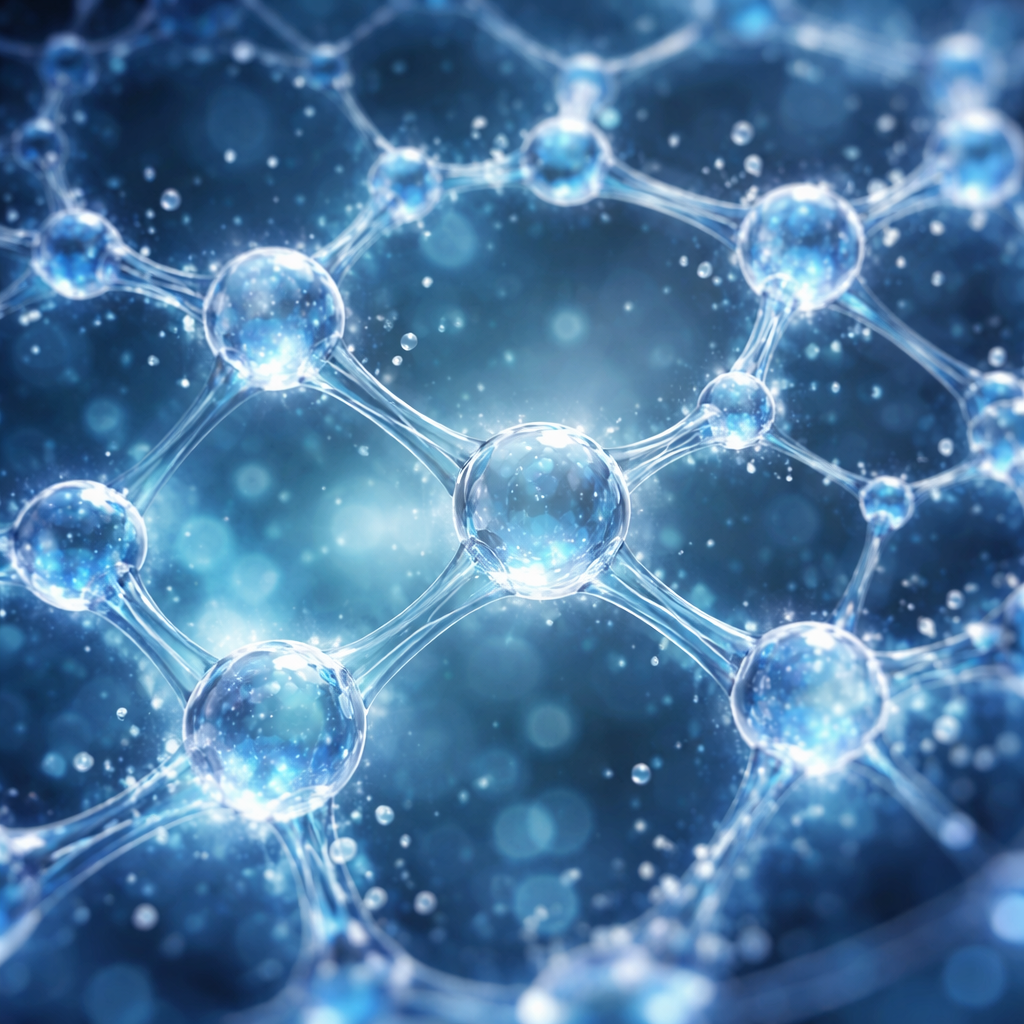
The result is that water is constantly forming tiny networks. Molecules join together briefly, separate, and reassemble again in new configurations. These structures form and dissolve billions of times per second.
Imagine a crowd of people continuously joining hands, forming circles, letting go, and reforming new circles.
That is roughly what water molecules are doing all the time.
Because of this, water is not just a collection of independent molecules. It is more like a living lattice of temporary structures.
The Idea of “Water Memory”
Some researchers have wondered whether these temporary molecular structures might persist long enough to influence how water behaves afterward.
If water molecules organize into particular arrangements when interacting with minerals, biological molecules, or surfaces, could those arrangements linger for a short time? Could the structure of the liquid carry a trace of its recent history?
This idea has sometimes been referred to as water memory.
The phrase can sound mystical, but the underlying idea is simply about molecular organization. Liquids can exhibit short-lived patterns that affect how molecules interact.
In biology, this matters enormously. Proteins fold in water. DNA exists in water. Every biochemical reaction inside the body occurs within this constantly shifting network.
The structure of water influences how these molecules behave.
Structured Water in Biology
Inside living cells, water behaves differently than it does in a glass on the table.
Near biological surfaces, water molecules often arrange themselves into more ordered layers. Scientists sometimes refer to this as structured water or interfacial water.
These layers can influence:
- how proteins fold
- how enzymes function
- how ions move through cells
- how membranes regulate transport
In other words, the organization of water is part of the machinery of life itself.
Without water forming these subtle structures, many biological reactions would not proceed the way they do.
A Sensitive Medium
Even in ordinary environments, water responds quickly to changes around it.
Temperature alters its structure.
Mineral content alters its structure.
Pressure alters its structure.
Electric fields alter its structure.
Water is constantly adjusting itself to its surroundings.
This responsiveness is one reason it plays such a crucial role in nature. It allows water to act as the medium through which countless chemical and biological processes unfold.
Why the Idea Persists
The notion that water might “remember” interactions fascinates people because it touches on something deeper.
Water is everywhere in living systems. Human bodies are mostly water. Plants rely on water transport. Blood plasma is largely water. The chemistry of life happens within it.
If water is sensitive to its environment, then understanding how water behaves becomes central to understanding life itself.
Perhaps the term “memory” is not quite right. But the broader insight remains compelling: water is not just a neutral background liquid. It is a dynamic, responsive medium that participates in the organization of matter.
The Mystery Remains
Scientists continue to study water because it repeatedly surprises them.
Despite centuries of research, water still exhibits behaviors that are not fully understood. Its molecular networks, its unusual physical properties, and its role in biological systems continue to reveal new layers of complexity.
What appears to be the most ordinary substance on Earth turns out to be one of the most remarkable.
And somewhere within that complexity may lie deeper clues about how life organizes itself in the first place.
Sometimes the most familiar things still hold the greatest mysteries.