Water and the Question at the Center of Life
If you follow the thread far enough, every investigation into life runs into the same quiet mystery.
What is life?
Biology can describe mechanisms. Chemistry can describe reactions. Physics can describe energy and motion. But when we look at a living system closely, something deeper is always present: a pattern that organizes matter into activity.
Cells maintain themselves.
Organisms adapt.
Ecosystems balance.
Life continuously reorganizes matter and energy in ways that appear purposeful.
And in every one of these processes, there is a common medium.
Water.
Not somewhere in the background. Not as a minor ingredient.
Water is the environment in which life unfolds.
The Ocean Inside Us
Human beings are mostly water.
Blood plasma is water.
Cells are water-filled structures.
Even the chemistry of DNA operates in a watery solution.
Remove water from a cell and the machinery of life stops almost immediately. Proteins cannot fold properly. Molecules cannot move freely. Chemical reactions halt.
Life does not merely use water.
Life happens inside water.
That alone should make us pause and reconsider how ordinary this substance really is.
A Strange Substance
Water looks simple: two hydrogen atoms bonded to one oxygen atom. But this simplicity hides remarkable behavior.
Water molecules constantly form and break bonds with each other, creating fleeting networks of structure. These hydrogen bonds give water properties that are unusual among liquids.
Ice expands when it freezes.
Water stores heat efficiently.
It dissolves an extraordinary variety of substances.
Most importantly, it forms a dynamic environment where molecules can move, interact, and reorganize.
Without that environment, the chemistry that sustains living systems would be impossible.
The Idea That Water Is Responsive
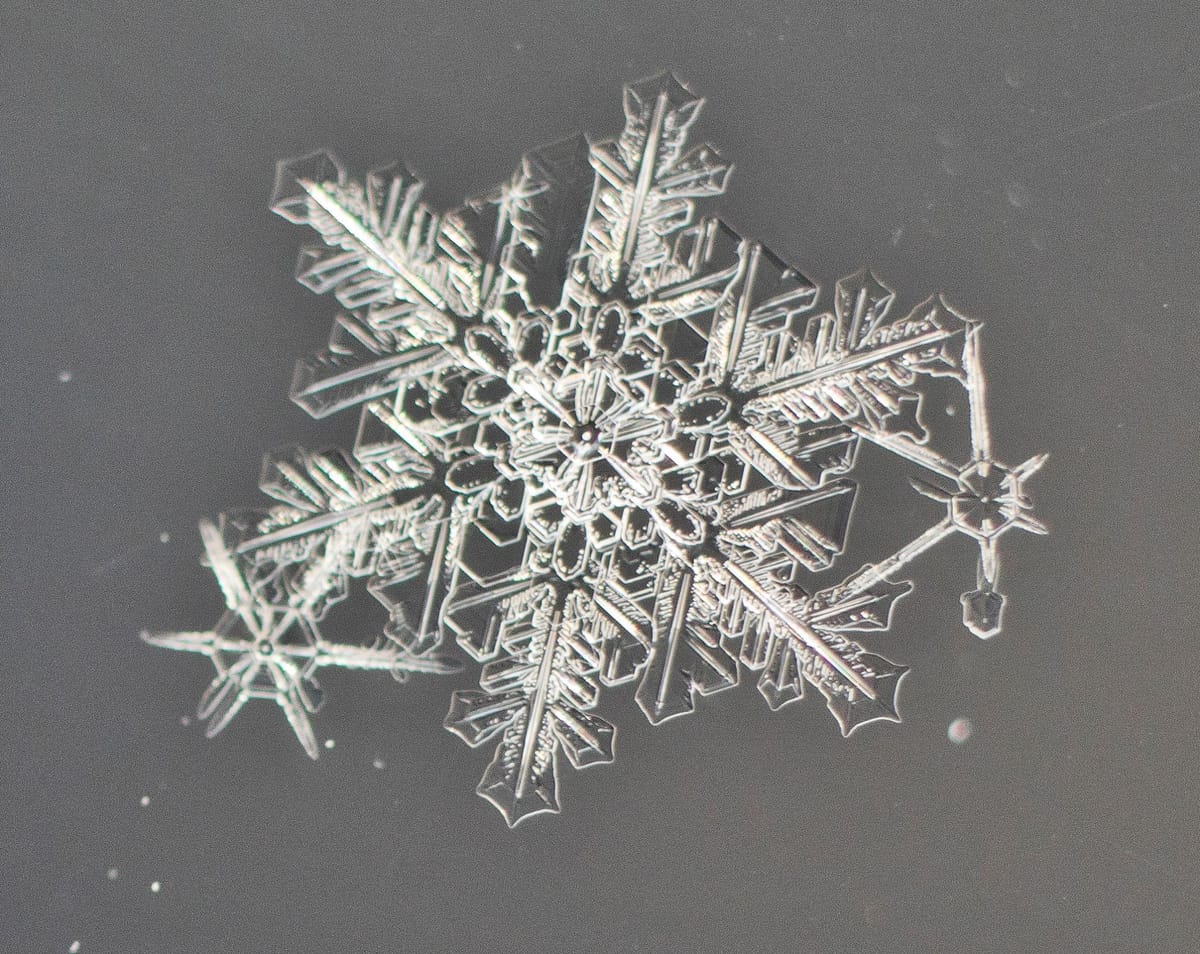
Researchers like Masaru Emoto became fascinated by the possibility that water might not merely exist as a passive medium, but might also respond to conditions around it.
His famous experiments photographing frozen water crystals suggested that environmental influences could affect how water structures itself during freezing.
Whether one accepts his conclusions or not, the idea resonates because modern science already recognizes something important: water is extremely sensitive to its environment.
Temperature alters its structure.
Minerals alter it.
Electric fields alter it.
Surfaces alter it.
Water is constantly reorganizing itself in response to the conditions around it.
In other words, water is not static.
It is a dynamic participant in the processes that occur within it.
Life as Organized Water
If one steps back and looks at living systems from a slightly different angle, a curious thought emerges.
What if life is not simply molecules floating in water?
What if life is a special way that water and matter organize together?
After all, the majority of biological activity takes place within the fluid architecture that water provides. Cells are essentially structured environments in which water and molecules interact in highly coordinated ways.
From that perspective, life might be understood not merely as chemistry, but as chemistry occurring within a uniquely structured medium.
Water becomes more than a solvent. It becomes the stage, the environment, and perhaps even part of the pattern itself.
The Unanswered Question
Despite centuries of research, scientists still cannot fully answer a simple question:
What transforms matter into life?
We know the components. We know the reactions. But the transition from chemistry to living organization remains one of the great mysteries of science.
And at the center of that mystery sits a glass of something we usually take for granted.
Water.
Perhaps the most remarkable substance on Earth.
Perhaps the quiet partner in every living system.
Perhaps the medium through which life learns to organize itself.
Whatever the ultimate explanation may be, one thing is certain: the more we study water, the less ordinary it appears.
And somewhere within that mystery may lie clues to understanding life itself.