Could Water Ever Be Used as Fuel?
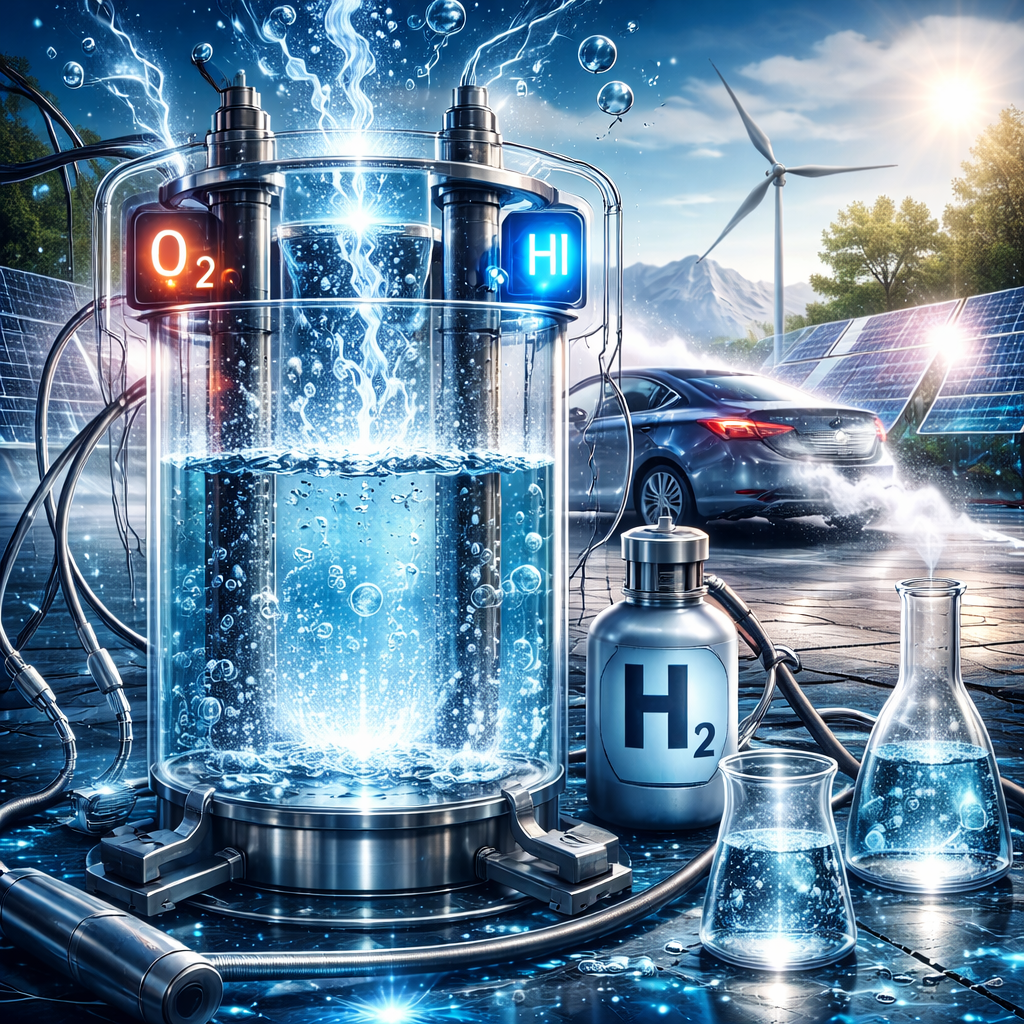
Every so often a story appears that captures people’s imagination: a machine that can run on water.
A car engine powered by water.
A generator fueled by water.
An engine that produces energy while emitting only steam.
These stories circulate widely, often accompanied by patents, demonstration videos, or experimental prototypes. Sometimes the claims are extraordinary. Sometimes they sound too good to be true.
But behind the noise and speculation lies something genuinely interesting. The idea of water as an energy source touches on a real scientific concept: water contains hydrogen, and hydrogen can be used as a fuel.
The question is not whether hydrogen is useful for energy. That part is well established. The deeper question is whether water itself could ever become a practical fuel source.
Why Water Is Not Normally Considered Fuel
Water is already the product of combustion.
When hydrogen burns in oxygen, the result is water. The reaction releases energy and produces heat and steam.
This means water represents a low-energy state. In simple terms, hydrogen and oxygen have already combined and given up their energy. That is why water does not burn.
To use water as a fuel, you would first have to break it apart again into hydrogen and oxygen.
This process is called electrolysis. Electricity is used to split water molecules into hydrogen gas and oxygen gas.
Once separated, the hydrogen can be used as a fuel in engines or fuel cells.
But there is a catch.
Breaking water apart requires energy. In fact, it typically requires at least as much energy as you later get back when the hydrogen is burned again. This is why water is not considered a primary fuel source in conventional physics.
Instead, it is treated as a carrier of hydrogen, not an energy source by itself.
The Hydrogen Economy
In recent years, hydrogen has attracted attention as a clean energy technology.
Hydrogen fuel cells can power vehicles and generate electricity while producing only water as a byproduct. Several car manufacturers have built hydrogen-powered vehicles, and research continues into hydrogen infrastructure.
In this context, water becomes an important part of the energy cycle. Renewable electricity from solar or wind power can be used to split water into hydrogen. The hydrogen can then be stored and later converted back into electricity.
So while water itself is not burned directly, it plays a role in hydrogen-based energy systems.
The Experimental Claims
Over the decades, a number of inventors and experimenters have proposed devices that appear to use water as fuel in unusual ways.
Patents exist describing systems that use electrical pulses, plasma discharges, or specialized resonant circuits to break water molecules apart more efficiently. Demonstration videos occasionally show engines running on systems that claim to draw energy from water.
Some of the most famous examples include experimental hydrogen generators connected to internal combustion engines. In these setups, water is split into hydrogen and oxygen, which are then fed into the engine as fuel.
However, none of these systems has been widely verified under controlled scientific conditions as producing more energy than they consume.
That does not necessarily mean every idea is incorrect. Many experimental concepts simply never reach large-scale testing. But it does mean that extraordinary claims require careful evidence.
So far, the conventional understanding of physics still holds: separating water into hydrogen and oxygen requires energy input.
Why the Idea Remains Fascinating
Even if water itself cannot serve as a primary fuel, the idea continues to inspire curiosity.
Part of the appeal lies in water’s ubiquity. Water is abundant, inexpensive, and essential for life. The thought that such a common substance might also hold untapped energy potential captures the imagination.
Another reason is that scientific progress often begins with unusual ideas. Many technologies that now seem ordinary once sounded improbable.
Electric power transmission, solar energy, and hydrogen fuel cells all passed through periods where they were considered speculative.
Exploring unconventional concepts can sometimes lead to genuine discoveries, even if the original idea turns out to be flawed.
Water and the Future of Energy
Today, most serious research involving water and energy focuses on hydrogen production and storage.
Scientists are working on more efficient catalysts, improved electrolysis systems, and ways to use renewable electricity to produce hydrogen on a large scale. These efforts aim to reduce emissions and create cleaner energy systems.
In that sense, water may play an important role in the energy future of the planet, even if it never becomes a literal fuel poured directly into engines.
The deeper lesson is that water continues to surprise us.
From its unusual freezing behavior to its complex molecular structure and its role in sustaining life, water remains one of the most remarkable substances in nature.
And every so often, a new idea reminds us that we may not yet understand everything it can do.