Clean Water in a Changing World
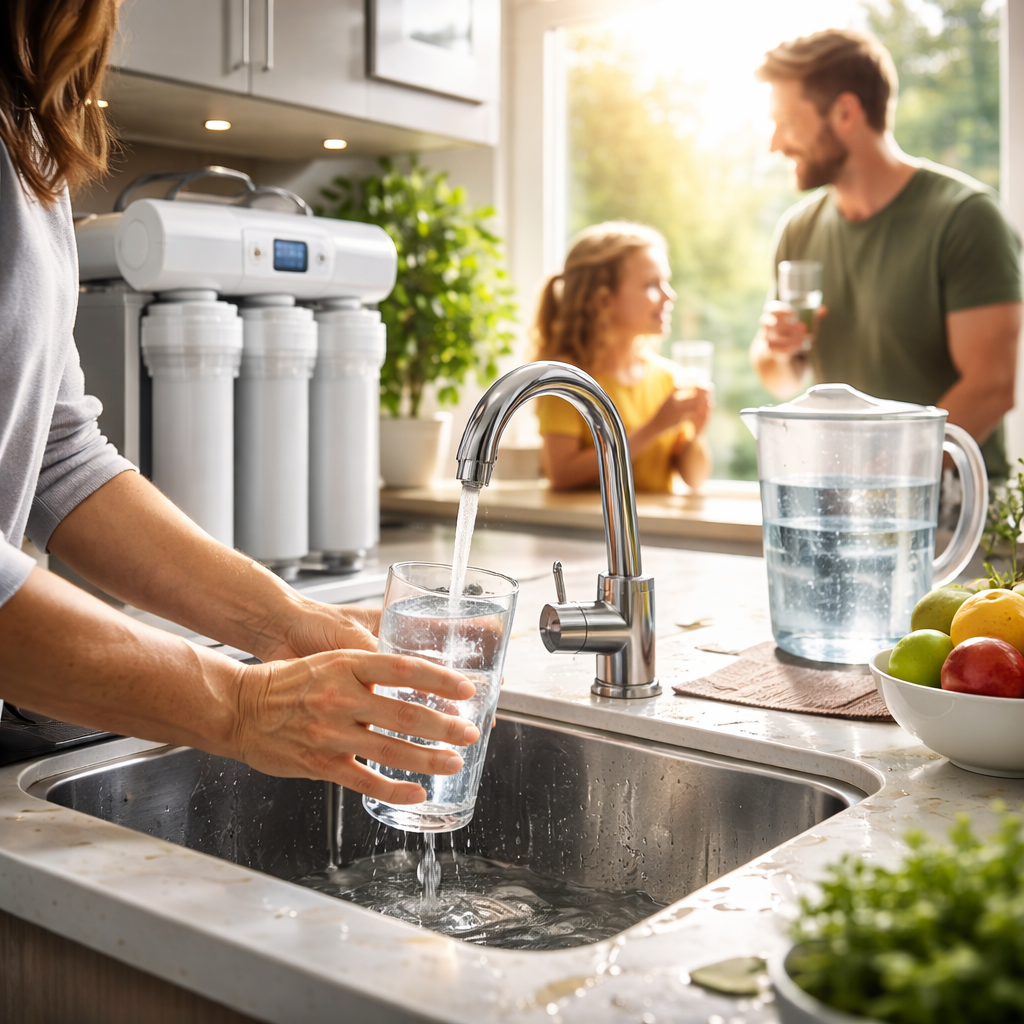
For most of human history, people drank the water that flowed through their environment.
It came from springs, rivers, wells, and rainfall. In many places the water was naturally filtered through layers of soil and rock before reaching the surface. The world itself acted as the purification system.
Today the situation is different.
Modern civilization has brought enormous benefits, but it has also introduced new substances into the environment. Industrial chemicals, agricultural runoff, pharmaceuticals, and synthetic compounds now move through soil, rivers, and groundwater in ways that were rare a century ago.
Water still looks clear when it comes out of the tap. But clarity does not always tell the whole story.
A More Complicated Environment
Over the past hundred years, thousands of new chemical compounds have entered industrial and agricultural use. Many of them are extremely useful. Some of them persist in the environment for a very long time.
Fertilizers wash into rivers after heavy rains. Industrial byproducts sometimes reach groundwater. Microplastics are now found in oceans, lakes, and even rainwater in some regions.
Most of these substances appear in extremely small concentrations. But their presence illustrates how much more complex the modern water environment has become.
Water moves through everything. It flows through soil, infrastructure, and ecosystems, carrying traces of the world around it.
Infrastructure Under Pressure
Municipal water systems were designed to solve many of the problems that plagued earlier generations. Water treatment plants remove bacteria, reduce sediment, and monitor for certain contaminants.
However, these systems operate under real constraints.
Many water utilities manage aging infrastructure that was built decades ago. Pipes, treatment facilities, and distribution systems require constant maintenance. At the same time, population growth and environmental changes place increasing demands on those systems.
In many regions, budgets for infrastructure improvements struggle to keep pace with the scale of the challenge.
This does not mean water systems are failing. It means they are working hard in a world that has become more chemically and environmentally complex.
The Last Mile Is the Home
Even when treatment plants perform well, water still travels a long distance before reaching a household tap.
It moves through municipal pipes, neighborhood lines, and the plumbing within individual homes. Along that path it may encounter metals, sediments, or residues from infrastructure that is older than the people using it.
Because of this, the final responsibility for water quality often rests at the last point in the system.
The home.
Taking Ownership of Water Quality
Clean water is too important to leave entirely to chance.
Testing household water occasionally can provide useful insight into what is present at the tap. Filtration or purification systems can provide an additional layer of protection when needed.
These steps are not about fear. They are about awareness.
Just as people take care in choosing food, maintaining air quality in their homes, or protecting the safety of their environment, paying attention to water quality is a natural extension of that same responsibility.
A Practical Perspective
The modern world is complex. Water systems are doing an enormous amount of work to keep communities supplied with safe drinking water.
But individuals can also play a role in protecting the health of their households.
A simple water filter.
Occasional testing.
Awareness of local water conditions.
Small actions like these can make a meaningful difference.
In a world where water carries the traces of everything it touches, taking responsibility for the water we drink is one of the simplest ways to protect ourselves and our families.